
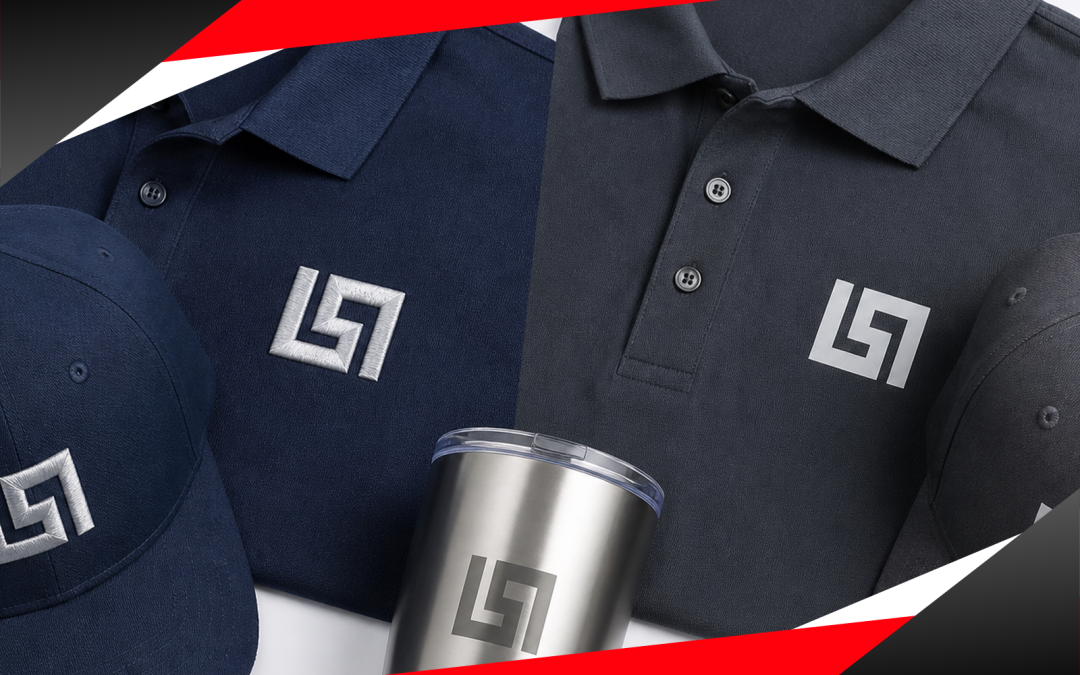
A logo that looks sharp in the mockup can look tired within six months on a crew that works outdoors in Queensland heat. That is why embroidery vs screen printing is a durability decision as much as a style one: your branding has to survive sun, sweat, dust, abrasion from tool belts and seatbelts, and a wash cycle that runs several times a week.
This guide walks through the choice the way a workwear buyer actually makes it, by garment type, logo design, order size, durability needs and cost, since understanding how branded uniforms lift your team image makes it easier to see why the decision matters beyond just looks. Neither method wins outright, because embroidery is usually the stronger option for uniforms worn day in, day out, while screen printing earns its place on large, bold, high-volume runs.
Embroidery vs screen printing: what the difference means on a work shirt
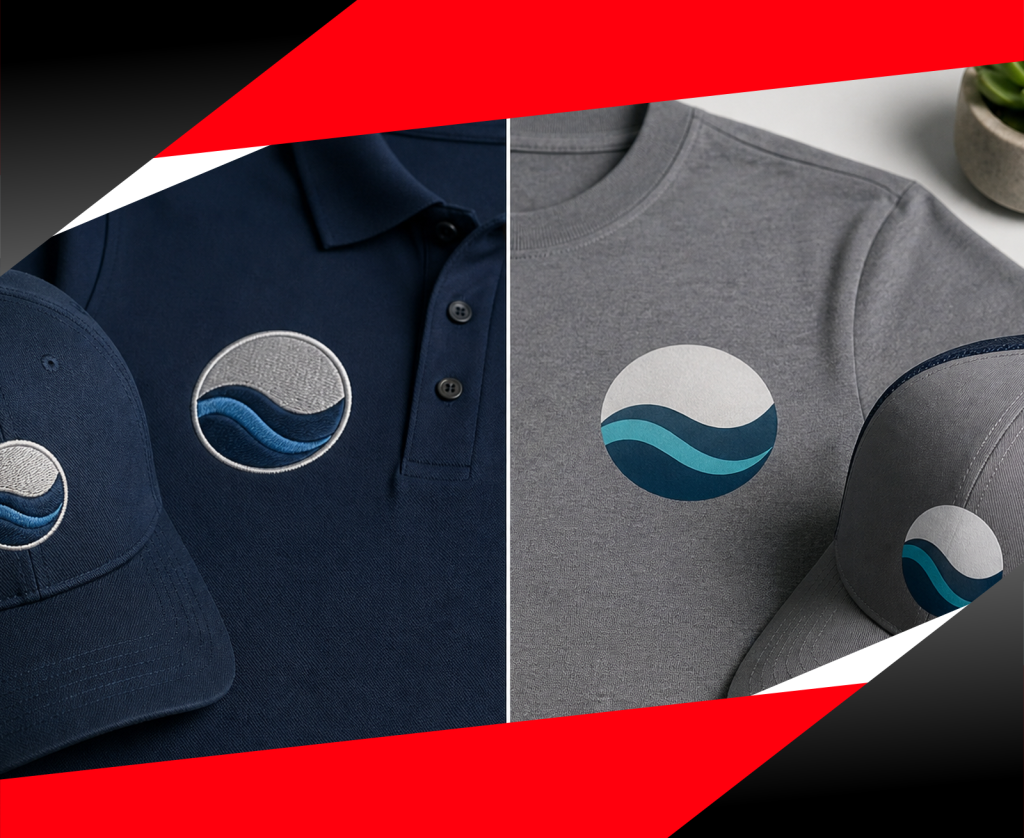
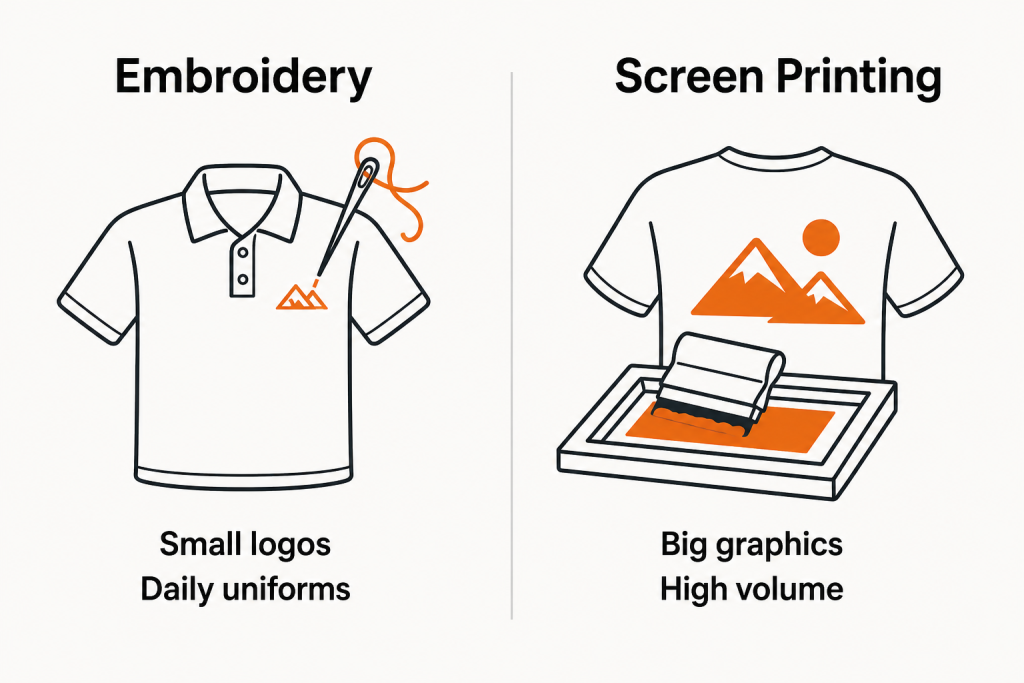
Embroidery stitches thread directly into the fabric, so the branding becomes part of the garment and sits slightly raised with a textured, premium finish. Screen printing pushes ink through a mesh stencil onto the surface of the fabric instead, which gives a flat, smooth, vivid result that adds no thickness.
What that means in practice comes down to size and lifespan. Embroidery is at its best on small, hard-wearing branding such as left-chest logos, staff names and cap fronts, the sort of marks that need to look professional in front of clients for years. Screen printing is built for scale, reproducing large flat graphics, big back prints, event tees and simple designs across a lot of garments with consistent colour. There is a physical trade-off in the feel, too, because stitched thread has weight and body while ink lies flat and stays soft, even across a large print area.
Where each method works best on Australian workwear
For everyday uniforms worn by trades, construction crews, outdoor teams and client-facing staff, embroidery is the usual pick, and polos, hi-vis work shirts, jackets, caps and small chest logos all suit stitched branding. These garments get worn hard and washed constantly, so a small embroidered logo keeps looking deliberate and professional long after a print of the same age has started to show its wear. Embroidery also handles the fabrics workwear is made from well, from heavy cotton drill through to polo knits and caps.
Screen printing comes into its own where volume and visibility matter more than a stitched finish: T-shirts for a site crew, promotional apparel, event uniforms, sponsor tees and large back logos that need to be readable from across a yard. It is entirely suitable for workwear when the fabric, placement and ink are matched to the job, particularly for simple designs on cotton or cotton-blend tees.
Plenty of crews end up using both, and that is often the smartest order when choosing branded merchandise for tradies. An embroidered left-chest logo carries the professional look on the front, while a screen-printed back panel does the heavy lifting for site visibility, listed services or a campaign message. One garment, two jobs, each done by the method suited to it.
Does embroidery last longer than screen printing in heat, UV and heavy washing?
For most everyday uniform use, yes. Embroidered thread is stitched into the garment rather than sitting on top of it as a layer of ink, so it holds colour and shape through frequent washing and drying far better than most prints. Closely stitched threads form a strong bond with the fabric, which is exactly why embroidery is the default on uniforms that see heavy daily use.
Australian conditions sharpen that difference. Outdoor crews are dealing with sustained sun exposure, sweat, dust and constant abrasion from harnesses, straps and tools, all of which age decoration faster than office wear ever will. Add a demanding wash routine and a print on the chest of a hi-vis shirt is being tested from several directions at once.
That is not a knock on screen printing, which is genuinely durable and holds up for a long time when it is done properly. Its weak points are specific: colours can fade and the print can crack or peel over repeated washes, and the risk rises with lower-grade inks, unsuitable fabric, poor curing or harsh laundering. High temperatures and strong detergents are the main culprits, so anything close to industrial washing shortens a print’s life noticeably. Embroidery is more forgiving here, though it is not indestructible, and stitching can snag if garments are washed with sharp items or handled roughly. Turning garments inside out before washing helps both methods. Durability, in the end, is a match between decoration, garment and working conditions rather than a fixed property of either technique.
What actually drives the price of each method
Embroidery pricing follows stitch count, so logo size, complexity, the number of thread colour changes, the initial digitising or set-up of the design file and total garment quantity all feed into the price. A simple left-chest logo is genuinely cost-effective for professional uniforms and stays economical across small and medium runs, which suits businesses kitting out a handful of new starters. Push into very large or highly detailed embroidered designs, though, and cost climbs quickly, along with the weight of the finished piece.
Screen printing pricing follows colours and set-ups instead. Each colour needs its own screen, so a four-colour design costs more to prepare than a one-colour one, and each extra print location adds another set-up. Those set-up costs are fixed, which is why the per-garment price drops sharply as volume rises: for fifty event tees carrying the same design, screen printing is almost always the cheaper route, and for eight embroidered polos it rarely is.
One piece of practical advice is not to compare decoration prices alone. A cheaper print that needs replacing after a year of hard site use is more expensive than stitched branding that outlasts the garment, so weigh the expected life of the uniform, how often you will reorder and whether the finish suits the role the staff are in.
Design and comfort limits that can settle the decision for you
Some artwork simply will not translate into thread. Very small text, fine lines, gradients, shading and photo-style detail lose definition when stitched, because thread has a minimum practical thickness and colours cannot be blended the way inks can. If your logo has a tagline in 6pt type or a subtle colour fade, embroidery will need it simplified.
Size and comfort matter just as much. A large embroidered area adds thread density, which makes the panel heavier and stiffer, and that is noticeable on a lightweight polo worn through a humid Queensland summer. Screen printing avoids that entirely, since ink sits flat and stays soft even across a full back print, which is one reason big graphics almost always go to print rather than thread.
Screen printing has its own constraints, mind you. Print quality depends heavily on fabric and placement, so stretchy, textured or heat-sensitive materials can compromise the result, and areas that flex or rub constantly are poor candidates too. Knowing how to get your logo looking sharp on apparel starts before you commit artwork: enlarge any small text, strip out detail that will not read at logo size, choose strong contrast against the garment colour, and place branding away from the spots where PPE straps, harnesses or tool belts sit.
Match the method to the uniform’s real job
Choose embroidery for long-term professional workwear such as polos, hi-vis shirts, jackets, caps and small chest logos on garments your team wears and washes constantly. Choose screen printing for large promotional or event runs, T-shirts, big back prints and simple bold designs where volume and visibility count for more than a stitched finish. Choose both when a uniform needs a durable, professional front logo alongside a large back print for site visibility, service listings, sponsor details or campaign messaging.
When a specific order comes up, run it past five checks:
1. Garment type: is it a structured polo, hi-vis shirt, cap or jacket, or a lightweight tee?
2. Working environment: how much sun, sweat, dust and abrasion will it face?
3. Wash frequency: everyday uniform, or occasional wear?
4. Logo complexity: fine text and gradients, or clean shapes and a couple of colours?
5. Order quantity: a dozen garments, or a few hundred with the same design?
If the answers point to a hard-worn everyday uniform, embroidery is the stronger default for Australian trade and outdoor crews, and if they point to bold graphics at volume, screen printing is the better tool. Sort your order into those two buckets before you request a quote and you will get pricing that reflects what each garment actually has to do.