
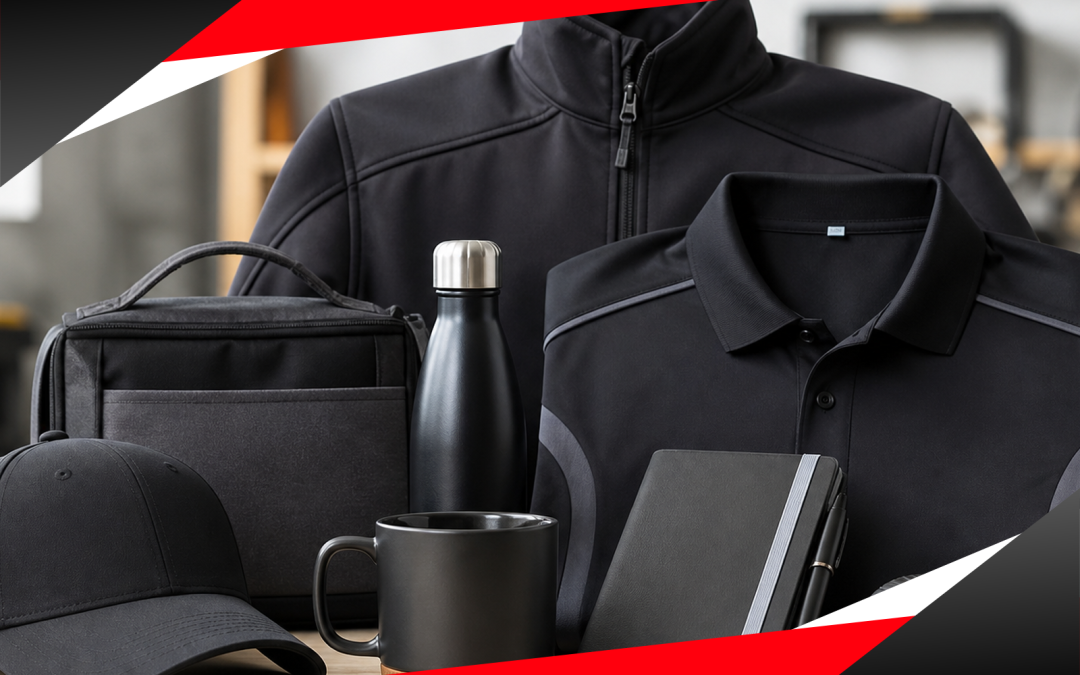
The best branded merchandise for tradies passes one simple test: someone keeps it, wears it or uses it without being told to. A cheap pen or a stress ball shaped like a traffic cone might tick the box on an order form, but it won’t survive a week in a ute tray, and it says nothing flattering about the business whose logo is on it. Practical items behave completely differently, because they travel to job sites, truck cabs and toolboxes, and they keep working long after the project wraps, while well-chosen branded uniforms lift your team’s image every time they’re worn on site.
So this guide covers how to judge merch for worksite use, which apparel and giveaway categories are worth the spend, how to match items to crews, subbies, clients and events, and what to check on quality and branding before you approve an order.
How to choose branded merchandise for tradies that will actually get used
Start with the tradie test. Would this live in the ute, get worn on site, come out at smoko, or get packed for a day outdoors? If you can’t picture any of those, the item will end up in a drawer and you’ve paid for storage rather than visibility.
From there, run each candidate against a short list of criteria: durability, genuine usefulness, comfort over a long shift, visibility where safety demands it, sun protection, how it handles repeated washing, and whether it looks credible on a worksite rather than like a freebie from a stand. That last point matters more than people expect, because crews notice quality, and a flimsy cap or a bottle with a lid that leaks reflects on the business name printed across it.
Australian conditions should shape the specifics too. Heat, dust, sweat and constant UV exposure will find the weak point in any garment or product, so favour heavier or better-engineered fabrics, colours that hide dust and don’t fade to a washed-out version of your brand, and finishes that survive being knocked around. Practicality beats novelty almost every time: one slightly better bottle or shirt that solves a daily problem will outperform triple the quantity of gimmicks, which is really the whole point of choosing products people actually keep and use instead of items destined for the bin.
Custom branded apparel that works from the site shed to the front office
Hi-vis work shirts are the strongest single choice for most crews, since they deliver uniform consistency, visibility and daily wear in one item, which means your logo is on show every hour of the job. One caution: bright orange or yellow is not automatically compliant. If the site or client requires certified visibility, you need garments made to the relevant AS/NZS standard rather than ordinary high-colour shirts, so confirm the requirement before you commit to a run.
Polos and tees cover everyone else, from estimators and supervisors moving between office and site through to maintenance teams, apprentices and lower-risk environments. Look for breathable, easy-care fabrics and a fit people will actually choose to wear, then ask the harder question, which is how the garment looks after twenty washes. A tee that goes shapeless or a print that cracks stops being marketing and starts being a liability.
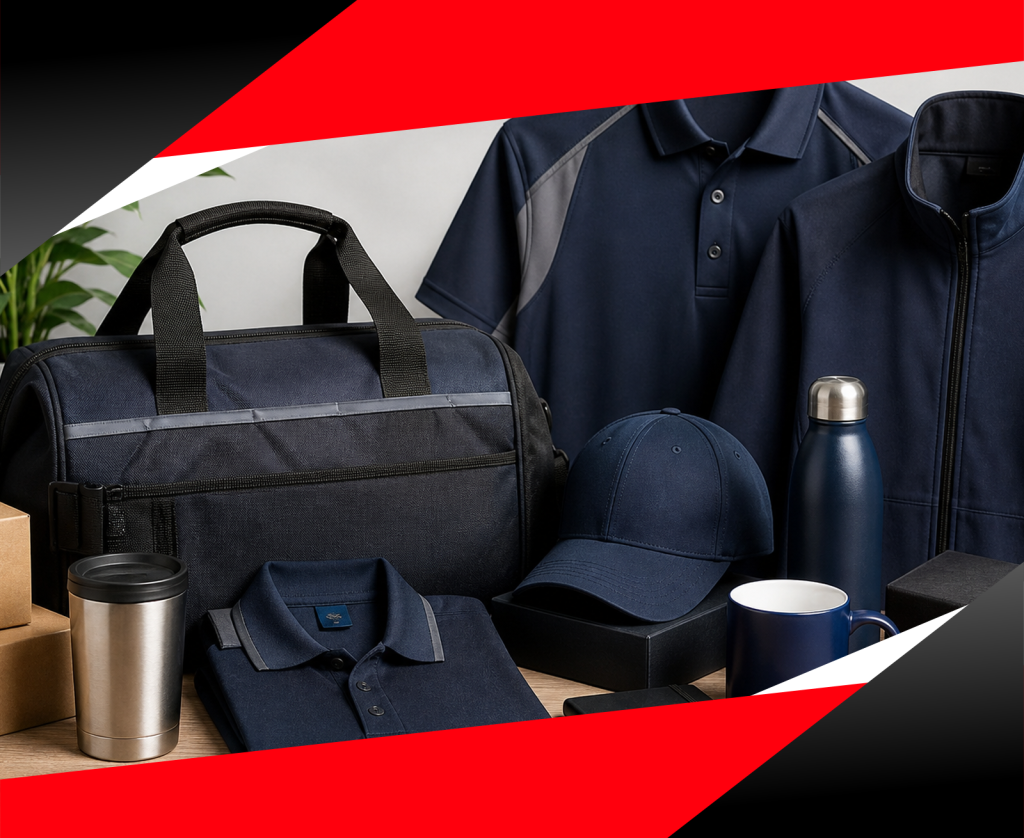
Hoodies and vests earn their place for cold starts and winter crew packs, and they tend to get worn well beyond work hours, though where reflective tape or required visibility zones are involved you’ll want decoration kept clear of them. Caps and beanies are the highest-retention add-ons you can order, one for sun protection through summer and one for frosty mornings, provided the cap feels solid and suits outdoor work rather than being a fashion piece that wilts after a fortnight. Bringing these pieces together into a custom branded merchandise range makes it easier to keep sizing, fabric quality and branding consistent across every role on site.
On logo placement, keep it simple. Left chest or sleeve suits everyday workwear, a back print gives you visibility at distance across a site or car park, and artwork on hi-vis, dark garments or textured fabric needs high contrast and few fine details to stay legible.
Promotional products for construction companies that solve a real problem
Drinkware is the obvious first stop, because hydration and a hot coffee are structural parts of the workday. Prioritise tough lids, secure seals, easy cleaning and branding applied so it won’t rub off in a toolbox, and you’ll find insulated tumblers and bottles keep travelling to job sites and truck cabs long after a project finishes, which is exactly the behaviour you’re paying for.
Cooler bags are underrated and worth the slightly higher unit cost. They answer a genuine smoko and lunch problem, so they tend to live permanently in utes and site sheds rather than being handed on, which makes them a strong pick for crew rewards, subcontractor packs and summer campaigns.
Towels and cooling towels, beanies and other seasonal accessories fill the gaps that heat, dust and changing conditions create through the year. In fact, branded caps for outdoor visibility are a natural extension of this category, giving crews sun protection on site while keeping your logo visible wherever the job takes them. For supervisors, estimators, site visitors and handover packs, notebooks, carpenter-style pencils, sturdy pens and clipboards all get used daily; just avoid fragile desk pieces, because anything that will crack or bend in a work bag is money spent on frustration.
Small tool-adjacent items such as key tags, torch keyrings and tape measures work only when the quality is trusted. A tape that slips or a torch that dies immediately is worse than no giveaway at all, since it hands a tradie a small daily reminder that your business chose the cheap option.
Match the merch to the person and the occasion
One generic item for everyone is the most common way to waste a merch budget, so split it by audience instead.
For crew uniforms, prioritise compliant hi-vis, washable work shirts, practical caps and weather-appropriate layers, so the whole team looks consistent whether the client turns up on day one or at handover. For subcontractor packs, choose things that are easy to hand out and immediately useful, such as tees, caps, drink bottles, key tags, pencils or a small stationery kit.
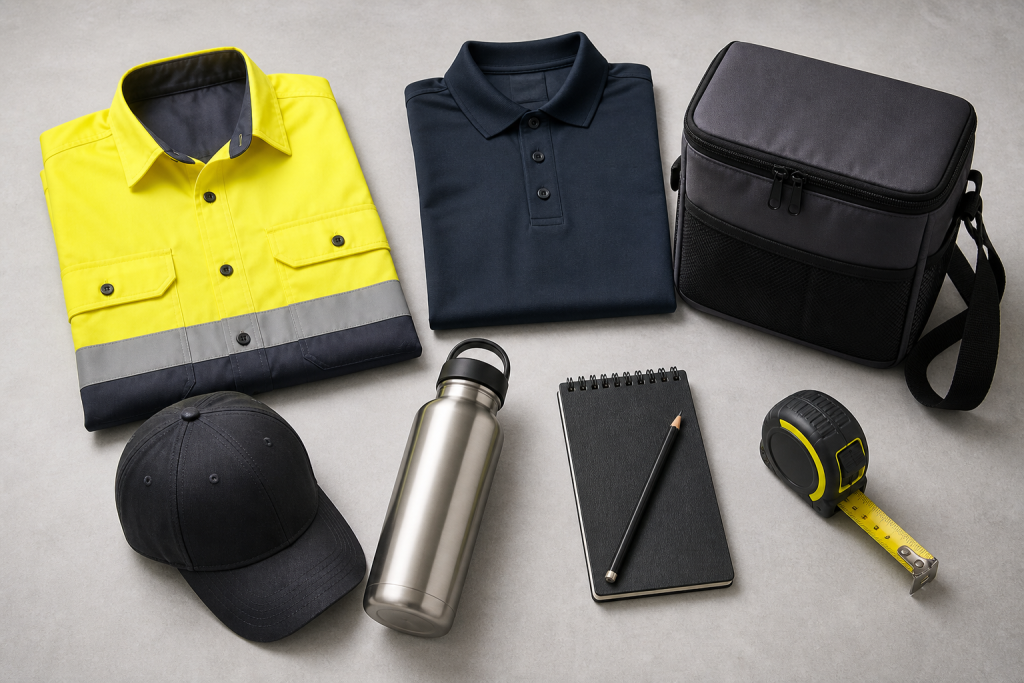
Client handovers deserve a step up in polish. Insulated drinkware, a cooler bag, a good cap or a quality notebook reads as a useful thank-you rather than leftover swag, and it keeps your name in the picture next time work comes up. At trade shows and field days, skip the generic giveaway and choose items tied to trade use, such as caps, bottles, tape measures, pencils or notebooks, because attendees who can picture using something are the ones who take it home rather than binning it in the car park.
Apprentices, safety days and seasonal campaigns suit bundles built around the moment: a starter pack with apparel and site stationery, a summer pack with a bottle and cap, or a winter pack with a hoodie or beanie.
What to check before you approve the order
Set a minimum viable quality first, then decide quantity. Fabric weight, stitching, lid strength, insulation performance, print durability and wash behaviour should all match worksite use rather than office use, and if an item can’t pass that bar, ordering more of it doesn’t help.
On decoration method, embroidery suits polos, caps, beanies and premium apparel because it holds up to washing and reads as considered, while screen print or transfer usually makes more sense for tees, hi-vis shirts and larger back logos. The right choice depends on the fabric, the artwork and how hard the garment will be worked, so ask rather than assume. Before signing off, check contrast and legibility on the actual product, because logos behave differently on fluoro yellow, on dark garments, on textured fabric and around the curve of a bottle.
Plan the sizing mix properly for crews and subbies, allowing room for layering wherever hoodies, vests or outerwear are involved, then split quantities by audience and occasion rather than ordering one item for everybody.
If you want a shortlist to work from, the best bets for Australian tradies are hi-vis work shirts, quality tees or polos, solid caps, insulated drinkware, cooler bags, hoodies or beanies for winter, and simple site-ready stationery. Fewer, tougher, more useful items beat a bigger pile of novelties, because every worn shirt, refilled bottle and packed cooler bag is a small ongoing statement about how the business operates.