
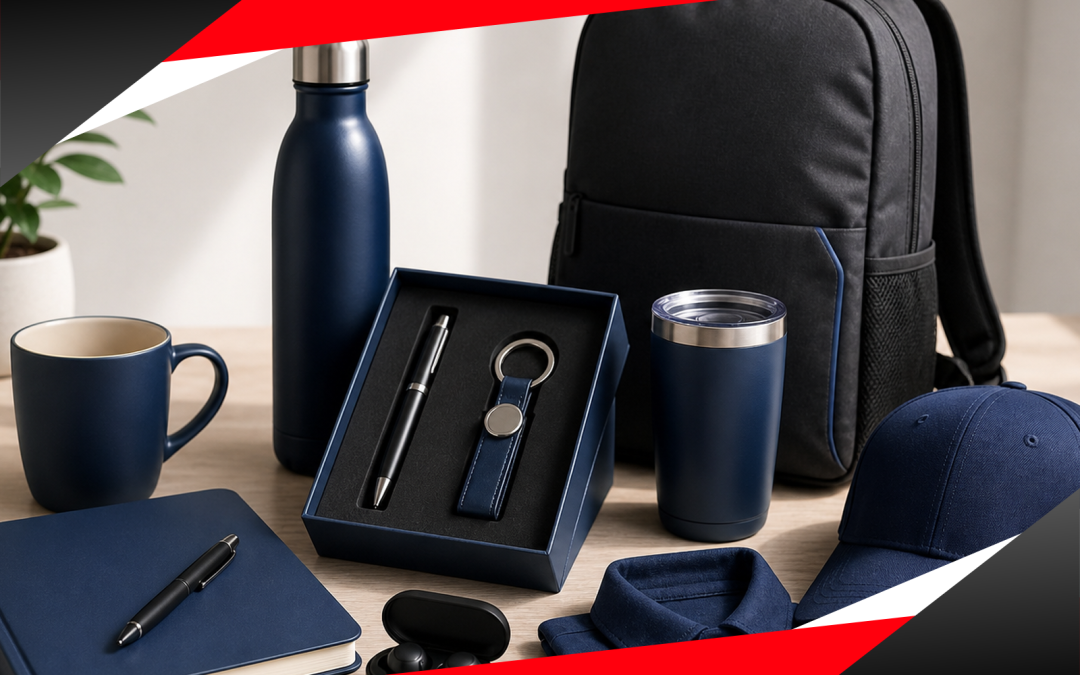
Most merchandise problems are briefing problems. The wrong fabric weight, a logo that prints blurry, a delivery that lands the day after the trade show: almost none of that starts in the factory, it starts with a three-line email that says “we need 500 branded items, can you quote?”
Knowing how to brief a promotional merchandise supplier is the difference between getting real recommendations back quickly and getting a generic catalogue link plus a week of clarifying questions. So this article gives you a supplier-ready structure to use before you order promotional merchandise for your business: what to include about your objective, product, artwork, budget and dates, why each detail matters to the people quoting and producing your order, and the briefing mistakes that quietly cause re-orders.
Start with what the merchandise is actually for
“Brand awareness” is not a brief, whereas “giveaway on our stand at a two-day trade show”, “welcome pack for new hires”, “thank-you gift for our top 50 accounts” or “launch moment for a sustainability campaign” all are. The intended use drives every decision that follows, from durability and price point through to decoration method, packaging and the minimum order quantity a supplier can work to.
So say who receives the item and how. A gift for senior banking clients has completely different economics to something handed to a thousand students, and the difference shows up in the shortlist immediately. Include how many recipients you expect, and whether the item will be handed out at an event, posted individually, packed into a kit, or stored in an office and issued over time. If it is an event, the show name, stand size and expected foot traffic all help.
Then name the feel and lifespan you are after, whether that is a low-cost giveaway, a practical everyday item, a premium gift, a sustainable choice, or something durable that staff will use on site for years. Framing the brief this way is really about identifying products people actually keep and use, which lets a supplier narrow branded items for business by quality tier, decoration method, packaging, freight practicality and realistic lead time, rather than guessing and sending you three options that all miss.
Define the product, quantity and delivery requirements
If you already have a product in mind, say so, and then say something more useful: whether you are open to alternatives. First choices fall over for ordinary reasons, because stock runs out, the logo does not sit well on a curved surface, the unit price is above your ceiling, or the lead time will not make your date. A brief that says \”we’d prefer these, but we’re open to similar options in the same price bracket\” saves an entire round of emails.\n\nSpell out the practical numbers and constraints too: quantity, size breakdown if it is apparel, colour preferences, packaging requirements, delivery addresses, whether the order needs splitting across sites, and any storage limits at the receiving end. Flag must-haves and must-avoids early as well, because non-negotiables cut the shortlist dramatically and are far cheaper to hear now than after the first sample. Natural fibres only, no plastic packaging, a specific certification, a colour that must match brand ink: all of it belongs in the brief.\n\nIt also helps to mention how the item will live in the world. Does it need to fit a standard mailer, survive being thrown in a car boot, work outdoors, suit a mixed audience, or match an event theme? With that detail, a supplier can check stock, minimum order quantities, colour availability, freight and decoration suitability before quoting, instead of quoting first and discovering the problems later, and being clear on these points from the outset is really what choosing the right branded merchandise comes down to
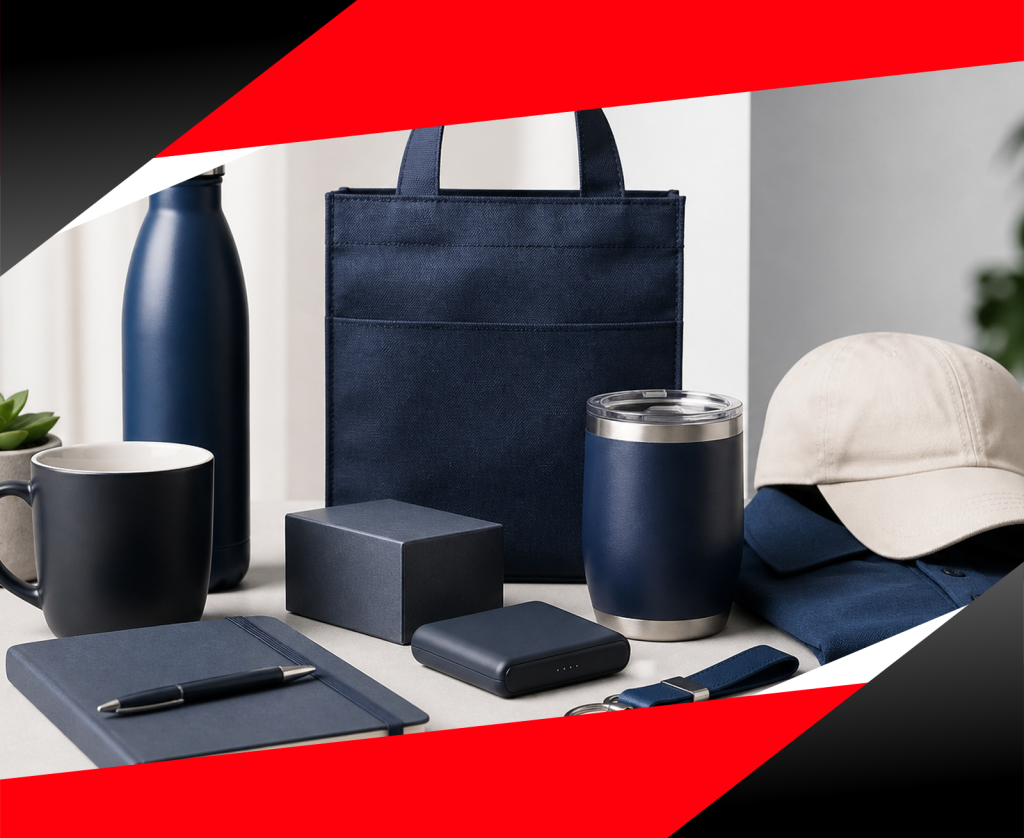
Send the brand and artwork details up front
Artwork is the single most common reason a job stalls between quote and production, so supply the best files you have at the briefing stage, ideally vector formats such as AI, EPS or SVG, plus high-resolution PNG or PDF versions where they are relevant. A logo pulled off your website is usually too low-resolution to print or embroider cleanly, and redrawing it takes time you may not have. Getting your logo print-ready from the outset, with the correct file types and colour references on hand, avoids these delays altogether.
Include your brand guidelines if you have them, covering approved logo variations, exclusion zones, font rules, and your colour references in Pantone, CMYK or RGB. Pantone matters most, because that is what a printer or embroiderer works to when matching your brand colour on a physical product. Say whether the logo is one colour, multi-colour, or contains a gradient, and whether any co-branded or partner logos need to appear alongside it.
If you know the decoration position and size you want, include it, along with photos of previous merchandise if you need this order to look consistent with the last one. Be aware that not every product accepts every decoration method: pad print, screen print, embroidery, digital print, laser engraving, debossing and sublimation all behave differently depending on the material and the artwork, so expect the supplier to recommend a method rather than simply accept a request.
Finally, name the person who approves the artwork proof, and say whether anyone else needs to sign off first, because unclear approval authority is a leading cause of missed deadlines. If legal, brand, leadership or an events team all have a say, put that in the brief so the proof cycle can be built around your organisation, not an assumed one. On larger runs it is also worth asking for a pre-production sample showing the exact decoration, on the exact product, in the exact colour, before the full quantity goes ahead. You can also explore getting your logo print-ready.
Set the budget, the dates and where you can flex
Give a budget. Hiding it does not get you a better price; it gets you options that were never realistic and a slower path to the ones that were. Provide either a total landed budget or a per-unit target, ideally both, and clarify what that figure has to cover: decoration, set-up costs, GST, freight, packaging and any kitting. The distinction is significant, because “under $15 per unit” and “under $10,000 total landed” point to noticeably different parts of the catalogue.
Dates work the same way, so give three of them: the date stock must be in hand at the delivery address, the date it needs to be in front of recipients, and the date you need the quote back by. Then say which one is immovable. Artwork approval, production and freight all sit between your order and your delivery date, so a supplier working backwards from a real event date can tell you immediately whether the timeline works, whereas “ASAP” gives them nothing to schedule against.
Two more things are worth adding. Say whether re-orders are likely, since that may change the product recommendation, stock planning and whether set-up costs are worth carrying, and state where you can flex: whether quantity can move, whether alternative products or colours are acceptable, and whether express freight or a different decoration method is an option if time gets tight. None of this guarantees a particular price or delivery date, but it stops the conversation circling options that were never going to work commercially.
The checklist and the mistakes worth avoiding
Pulled together, a complete brief for company branded merchandise covers: objective, audience and how the item is distributed, preferred products and acceptable alternatives, quantity, sizes and colours, packaging, delivery locations, must-haves and must-avoids, logo files and brand colour references, desired decoration position, who approves proofs, budget and what it includes, required delivery date, event date, quote deadline, and where you can flex.
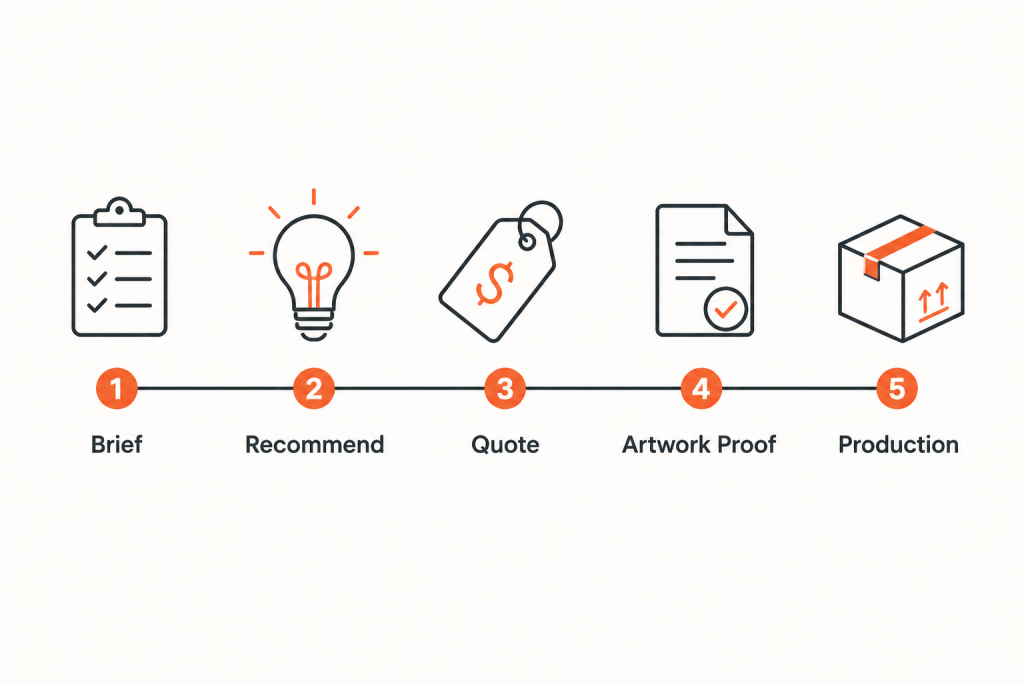
That brief lets a supplier run a clean sequence: review the objective, recommend suitable products, check stock and availability, prepare a quote, confirm what the artwork needs, issue a proof, wait for your approval, then move into production and delivery. Every missing detail interrupts that sequence at a specific point, because unclear goals produce generic suggestions, missing dates make scheduling impossible, missing artwork stalls proofing, and a hidden budget burns the first round of options entirely.
The mistakes worth avoiding are the predictable ones: opening with “we need merch” and nothing else; asking for “ASAP” without a real deadline; sending a low-resolution logo grabbed from a website; introducing a new approver after the proof has gone out; withholding the budget; ignoring lead times on a fixed event date; assuming every product takes the same decoration method; and approving a proof without properly checking colour, placement, spelling and which logo version was used. That last one is the most expensive, because it is the point at which a mistake becomes a re-order.
The practical next step is simple: before you contact a supplier, spend twenty minutes gathering these answers into one email or document, with your logo files attached. Do that and the first reply you get back will be suitable options, accurate pricing and clear next steps, rather than a list of questions you could have answered before you started.